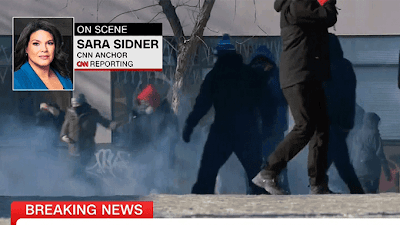
A video circulating from January 24, 2026, shows a CNN correspondent visibly affected by tear gas while reporting live from ongoing protests in Minneapolis, Minnesota.
The footage and related coverage highlight the intensity of the situation on the ground following clashes between federal law enforcement and crowds demonstrating against a recent shooting by immigration agents.
In the clip, CNN’s Sara Sidner can be heard coughing repeatedly and telling the camera crew she is “trying to breathe” as smoke fills the street. At one point, her colleague in the studio cuts back to another anchor because Sidner has difficulty speaking clearly due to the irritation caused by the gas.
She later said she had temporarily taken shelter nearby as the tear gas affected her ability to continue reporting from the scene. Tear gas is a chemical irritant commonly used by law enforcement to disperse crowds during protests or civil unrest.
It can cause coughing, eye irritation, and respiratory discomfort, especially when deployed in dense concentrations. Reporters covering demonstrations have sometimes been affected unintentionally while documenting major events, as they are positioned close to where law enforcement activities are unfolding.
The Minneapolis protests on this day were part of a broader response to a deadly incident earlier in the afternoon in which federal immigration agents shot and killed a local resident, leading to widespread public anger and large gatherings in the streets.
Federal officers responding to the unrest deployed tear gas at multiple points to disperse crowds, leading to scenes captured by journalists from several networks.
CNN’s reporting team had been stationed near one of these confrontations when the tear gas was released. In the video, thick clouds make it difficult to see beyond a short distance, and the reporter’s voice shows the effects of the irritant in the air. As the situation escalated, the network temporarily shifted the broadcast away from her location until conditions improved.
Incidents in which journalists are affected while covering protests are not entirely new. Press freedom organizations have documented numerous cases in recent years where reporters have encountered crowd‑control tactics like tear gas or rubber projectiles simply because they were near the scenes they were covering. Such situations have raised discussions about how law enforcement engages with the press during tense public events.
The coverage from Minneapolis also included other news anchors on the ground describing what they were seeing and urging protesters and law enforcement alike to avoid escalation. The presence of tear gas and other crowd‑control measures contributed to an atmosphere that made live reporting especially challenging.